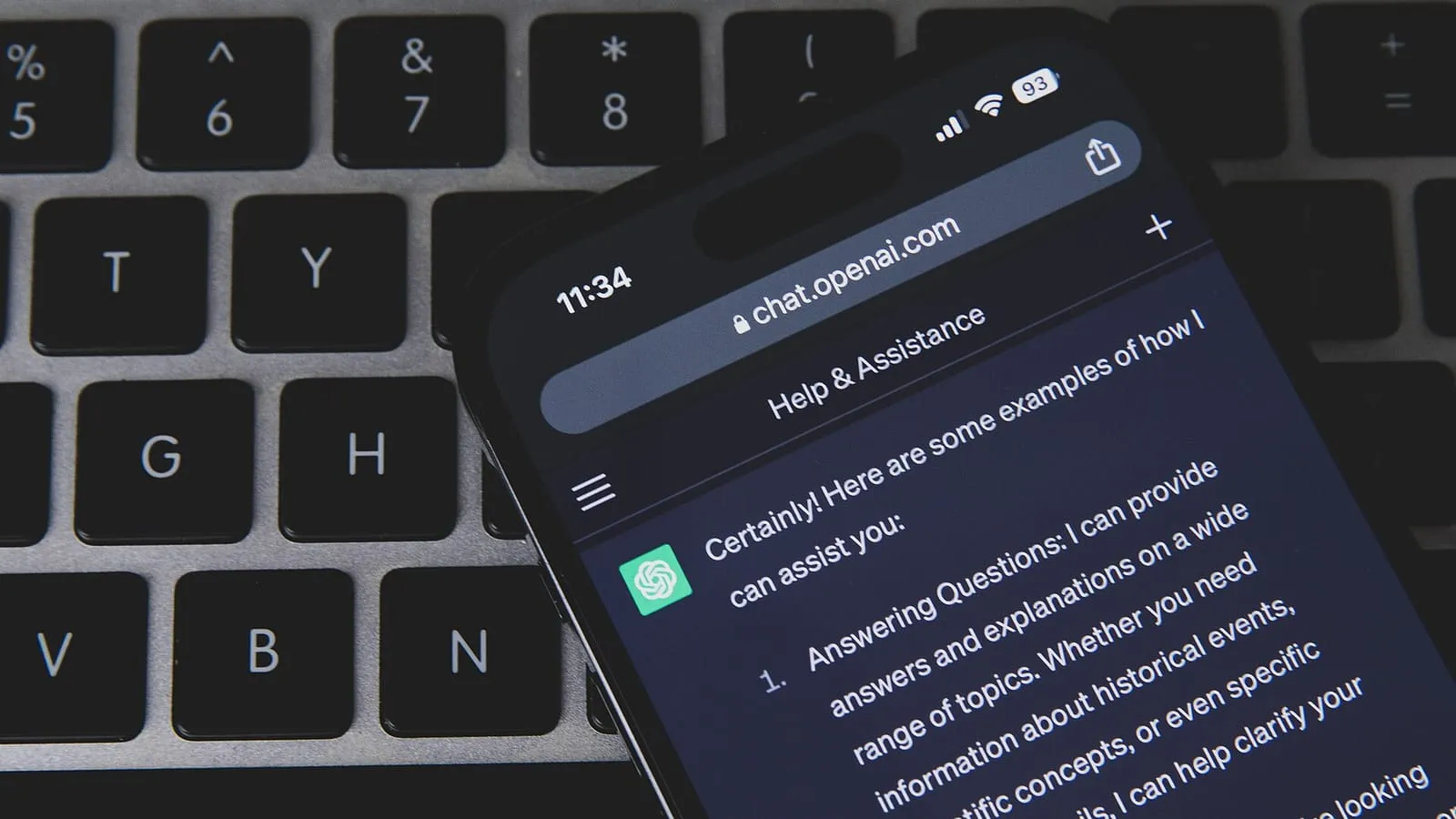
More and more people ask an AI before they look for a supplier: “who builds websites in Rosario?”, “which real estate agency do you recommend in Paraná?”. And services promising to “rank you on ChatGPT” with secret formulas are already showing up.
The good news is that there is no secret formula. Google is fairly direct about it in its guide for site owners: there are no additional requirements to appear in AI Overviews or AI Mode, no special optimizations, no new AI text files and no specific structured data. Your page has to be indexed and eligible to appear in Search with a snippet.
That doesn’t mean there’s nothing to do. It means the work is different, and that nobody can guarantee you a spot.
Why it’s worth dealing with this now
A Pew Research study analyzed real searches by 900 US adults in March 2025. When Google showed an AI summary, people clicked a traditional result in 8% of visits, compared with 15% when there was no summary. They clicked a link inside the summary itself in just 1%.
A business can read that in two ways. First, informational questions bring fewer visits than they used to. Second, if the answer names your company, people see you even if they don’t click. So counting site visits alone is no longer enough.
1. Check that Google can read your site
It sounds obvious, but it’s the first thing that fails. Before thinking about AI, verify your site in Search Console and see whether your important pages are indexed. Also check that your robots.txt or your hosting provider isn’t blocking crawlers without you knowing.
You can run a first review with our free SEO check.
2. Put your information in real text
Google recommends making important content available as text. If your prices, services or service areas are inside an image or a PDF, you’re making them harder for any system to read.
Other AI search tools may be even less flexible. A Vercel analysis from December 2024 found that crawlers from OpenAI, Anthropic, Meta and Perplexity didn’t execute JavaScript. If your site only gets built in the browser, those systems could receive an almost empty page. That may change, but the fix stays valid: have your main content already in the HTML.
A quick test: open your site, right-click and choose “View page source”. If you can’t find the name of your main service, you have a problem.
3. Answer the questions people send you on WhatsApp
AI answers are built from pages that explain something clearly. And you already have the best questions: they’re the ones you get every day.
- How much is it, and what does the price depend on?
- Which areas do you work in?
- How long does it take?
- What do I need to have ready?
- What’s the difference between this option and that one?
Answer them on your site with concrete sentences. “We work in Rosario and Funes, and deliver in two weeks” is useful. “Comprehensive solutions tailored to your needs” says nothing to anyone, human or machine.
4. Keep your Business Profile up to date
Google explicitly asks you to keep your Business Profile and Merchant Center information current. Hours, address, phone, services and photos have to match what your site says.
If you haven’t worked on yours yet, follow our guide to showing up on Google Maps.
5. Get other people talking about you
Your site tells your version. What others say confirms it, and Google already considers information about your business from elsewhere on the web for local results. No AI company has published a formula, so this is our judgment rather than a rule: the more consistent the things said about you in different places, the more material there is for an AI to name you.
Collect real reviews, get listed in directories for your industry and in local media, and have suppliers or trade groups mention you. For reviews, here’s a guide with no tricks.
6. Use structured data, but don’t expect magic
Structured data tells a search engine what each thing is: your address, your services, your hours. Google makes clear that none of it is specific to AI, and asks that it match the visible text on the page.
It helps avoid confusion, not win a place in the answer. Be wary of anyone selling you the opposite.
7. Don’t publish hundreds of AI-generated pages
This is the most dangerous temptation right now. Google’s spam policies list using generative AI to create many pages without adding value as an example of abuse.
Using AI to help you write isn’t the problem. The problem is publishing text that could belong to any company. What sets you apart is what a machine doesn’t know: your prices, your cases, your areas, the mistakes you see every week.
How to tell if it’s working
There’s no perfect measurement today. Google includes the traffic from these features in Search Console’s general Performance report, without breaking it out there. Three things you can do:
- Ask every new client how they found you, and write it down.
- Check your analytics tool for visits from sites like chatgpt.com or perplexity.ai.
- Once a month, ask several AIs the same five questions and note whether they name you. Answers vary, so look at the trend rather than a single result.
The bottom line
Optimizing for AI today looks a lot like doing the basics well: a site that can be read, specific information and a good reputation beyond your own site. If you’d like us to review it with you, see our SEO and maintenance service.